College updates
The Scientific Council opens its second session with seventeen members from nine countriesTwenty-four courses approved in the updated plan for the three specialization stagesThirty-two indexed sources added to the college's Digital LibraryA chained samāʿ session of Ṣaḥīḥ al-Bukhārī begins early next monthThe first issue of the college's peer-reviewed academic journal is releasedThe Scientific Council opens its second session with seventeen members from nine countriesTwenty-four courses approved in the updated plan for the three specialization stagesThirty-two indexed sources added to the college's Digital LibraryA chained samāʿ session of Ṣaḥīḥ al-Bukhārī begins early next monthThe first issue of the college's peer-reviewed academic journal is released

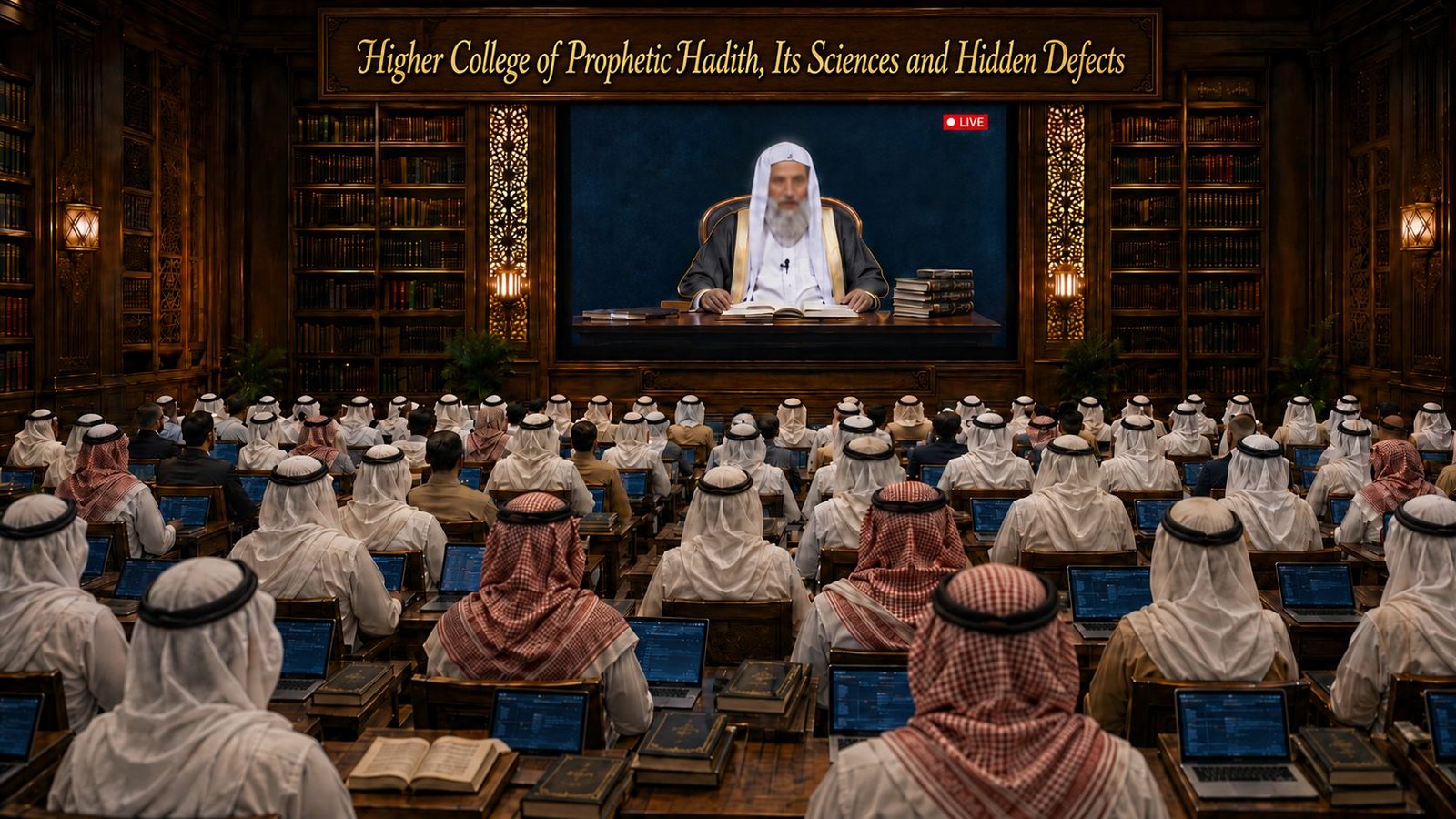
The Higher College of Prophetic Hadith, Sciences, and Studies

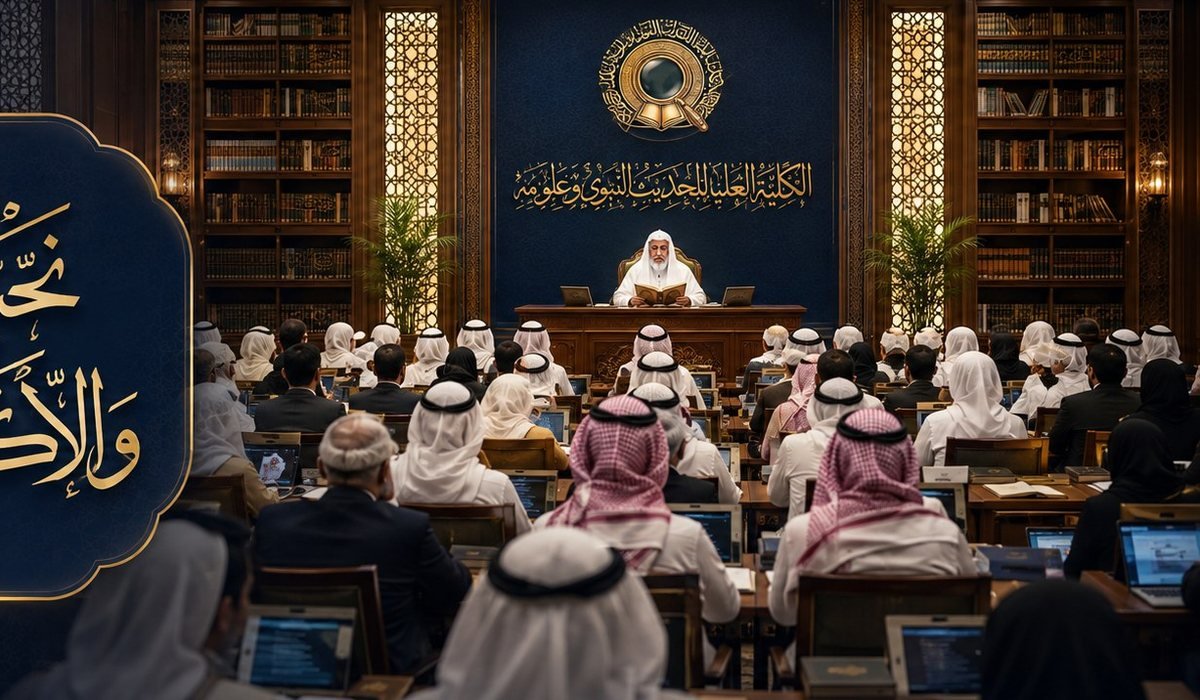
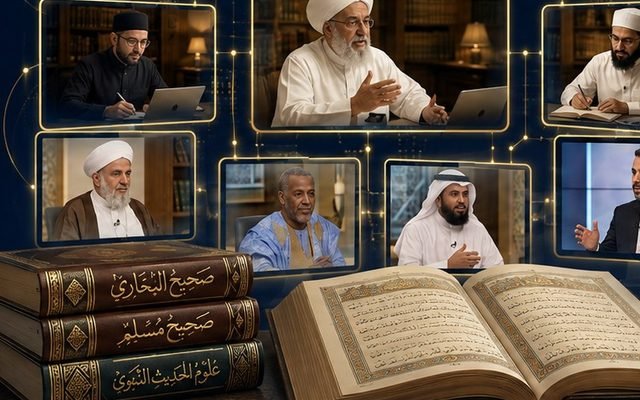
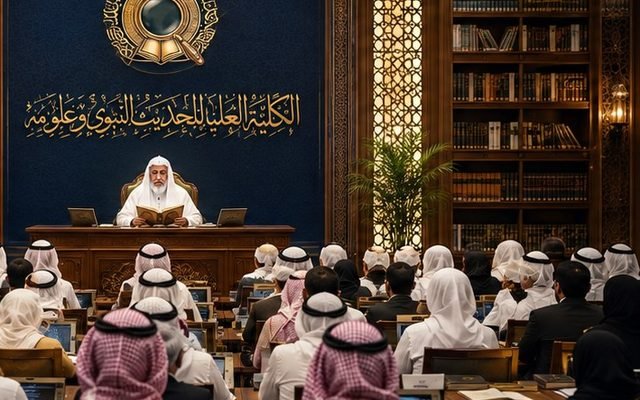
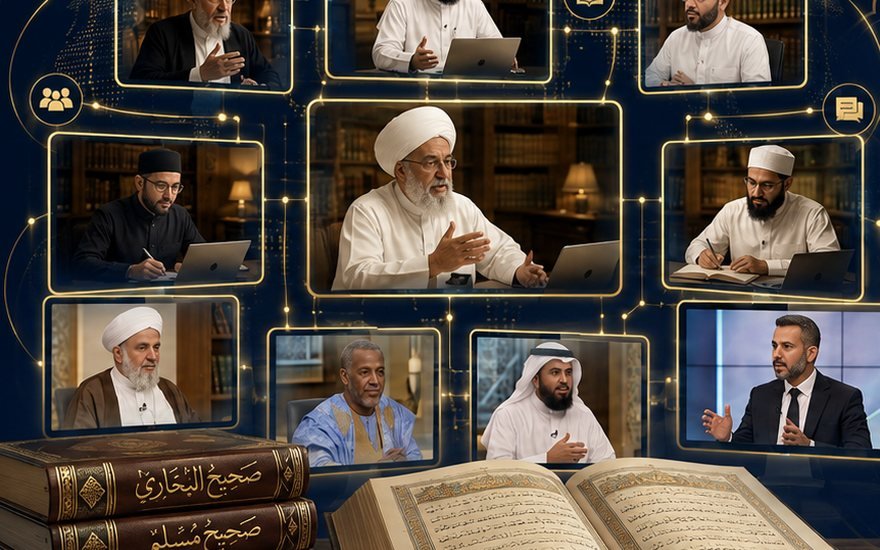
A live lecture hall where students follow a senior scholar on screen
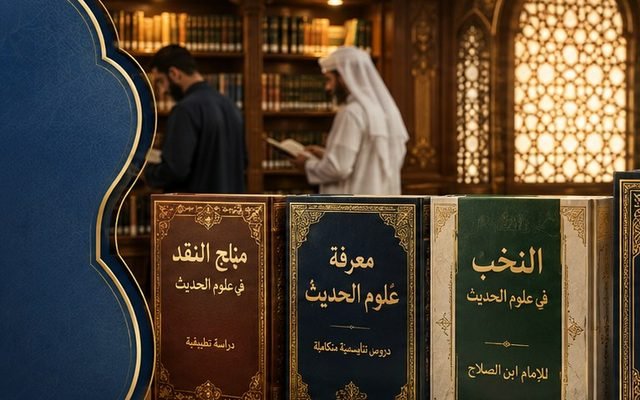
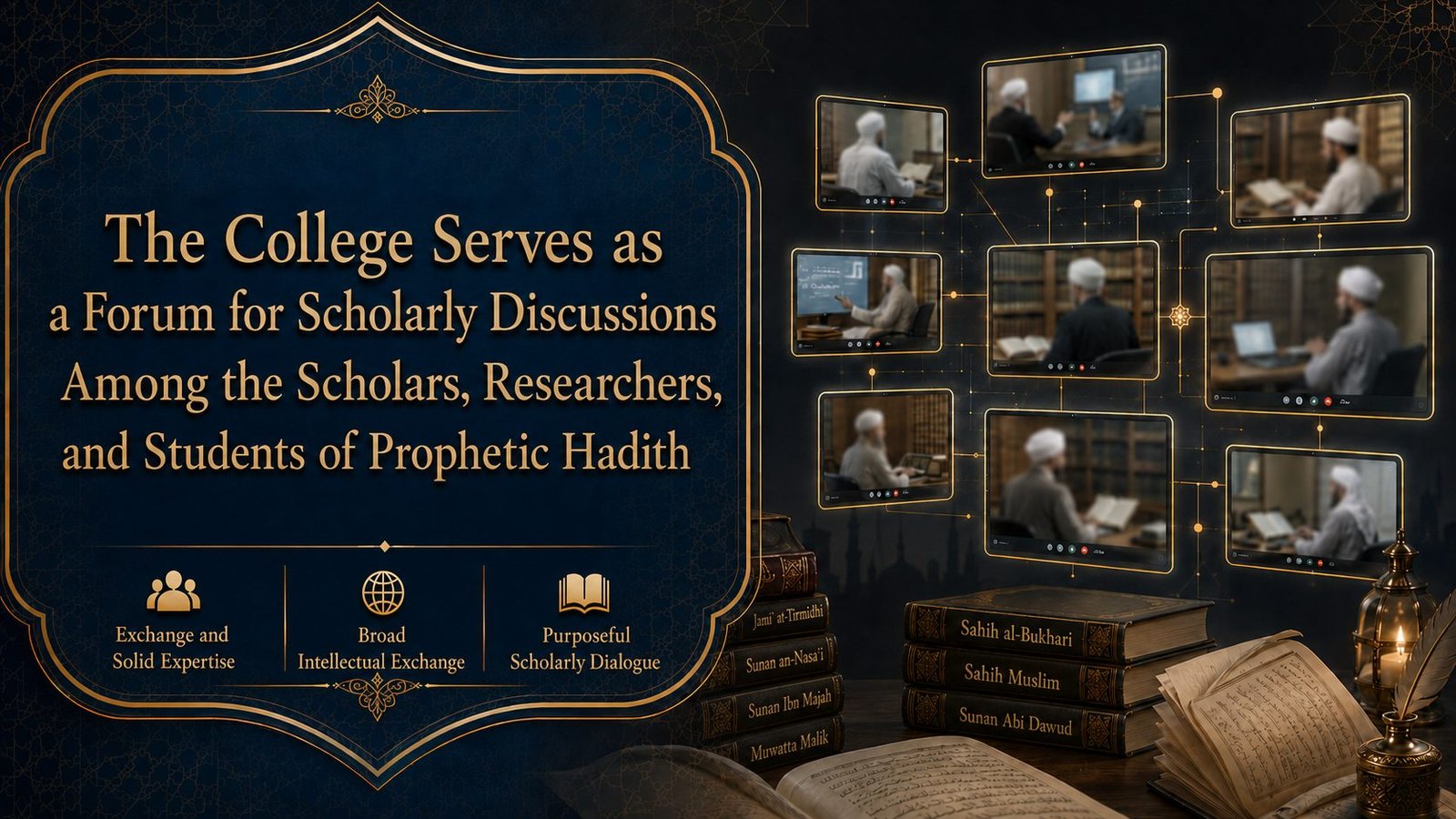
The college's scholarly discussion councils
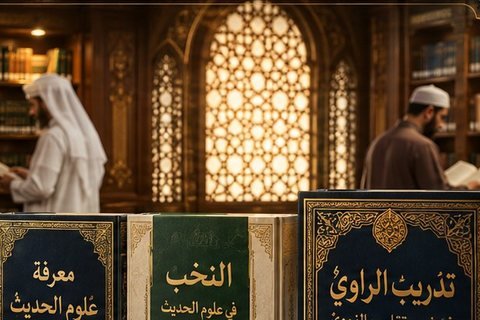
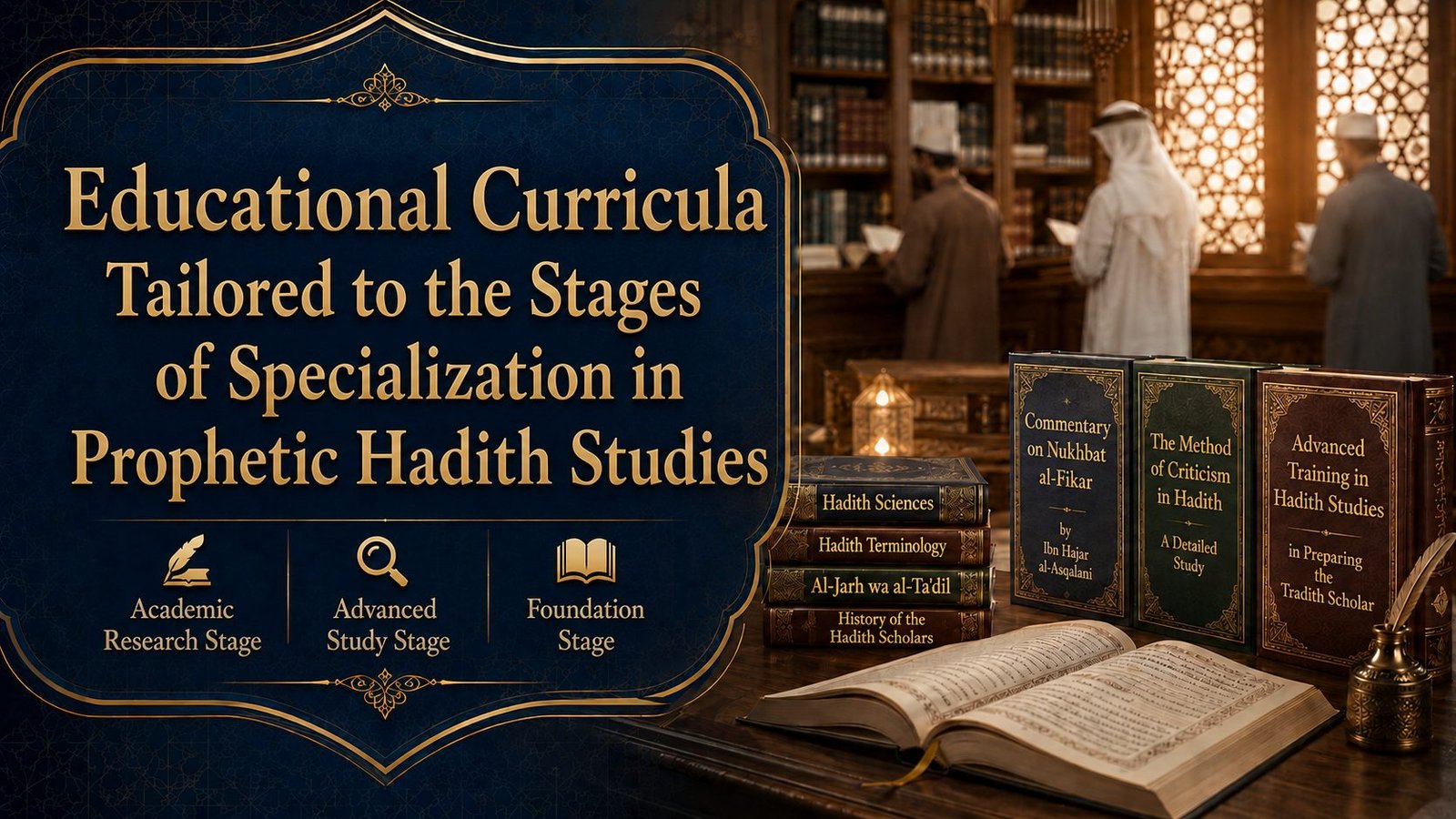
A curriculum aligned with the stages of specialization
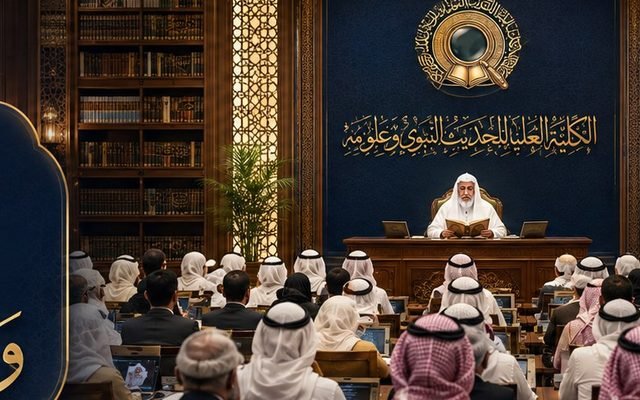
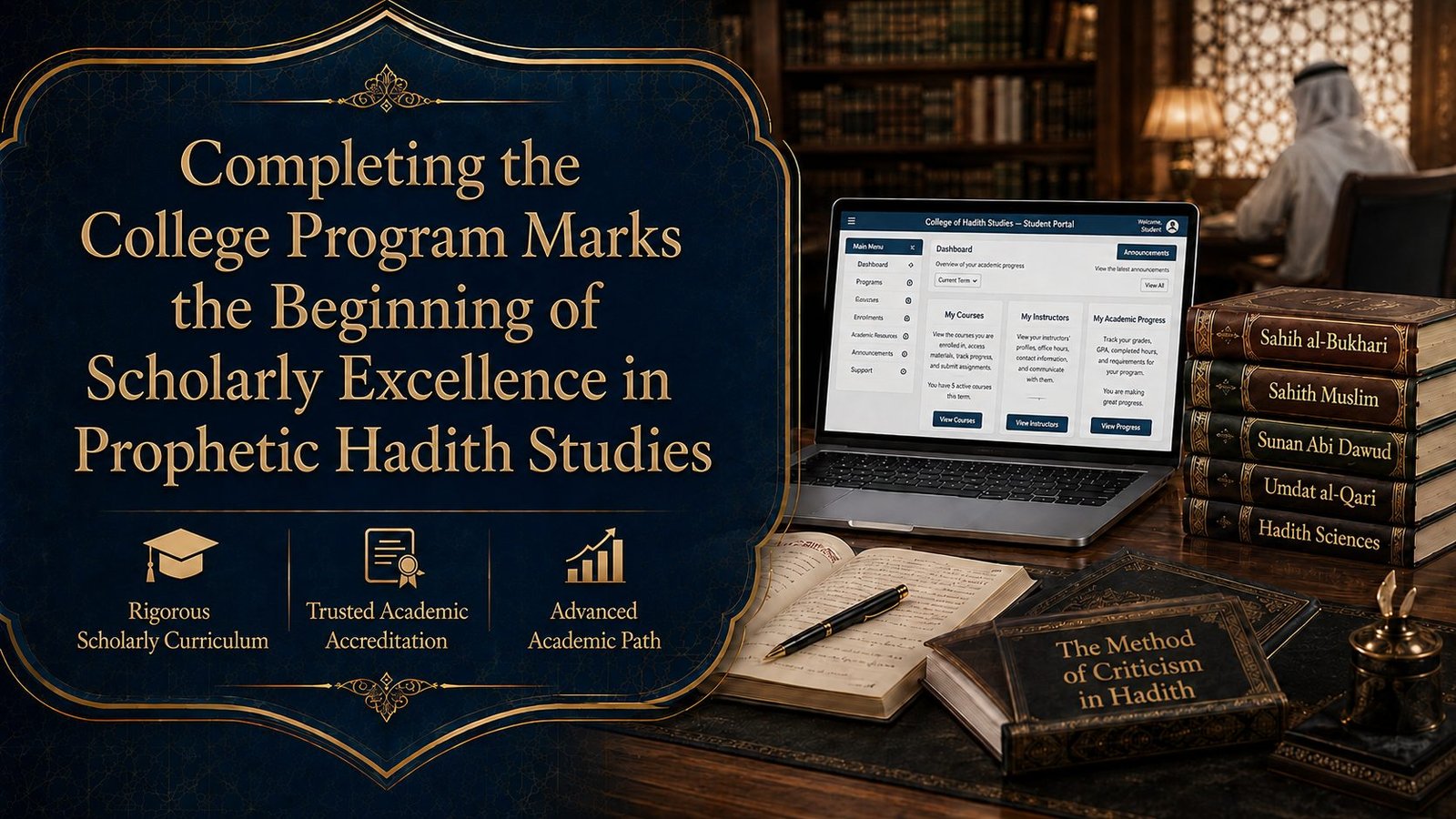
Completing the program marks the beginning of the ʿālamiyyah

Global leadership and scholarly authority in the service of Prophetic Hadith, its sciences and its hidden defects

  • 0progressive
    specialization stages
  • 0accredited courses
    in the plan
  • 0members of the
    academic faculty
  • 0scholarly councils
    in the Forum
  • 0countries represented
    by the faculty
  • Registration is open for this year's cohort Apply now

The college's pillars

A consultative and arbitration body
of high scholarly credibility

The college is a consultative and arbitration body of high scholarly credibility in Prophetic Hadith, its sciences and its hidden defects.

The advisory board
First pillar

The Forum of scholarly discussion

Councils of dialogue and study among hadith scholars, their researchers and students, following the way of the hadith masters in question, answer and defining the point of dispute. Twelve active councils on chains, defects, terminology and manuscripts, run under the supervision of the Scientific Council.

Enter the Forum
Second pillar

An elite of senior scholars

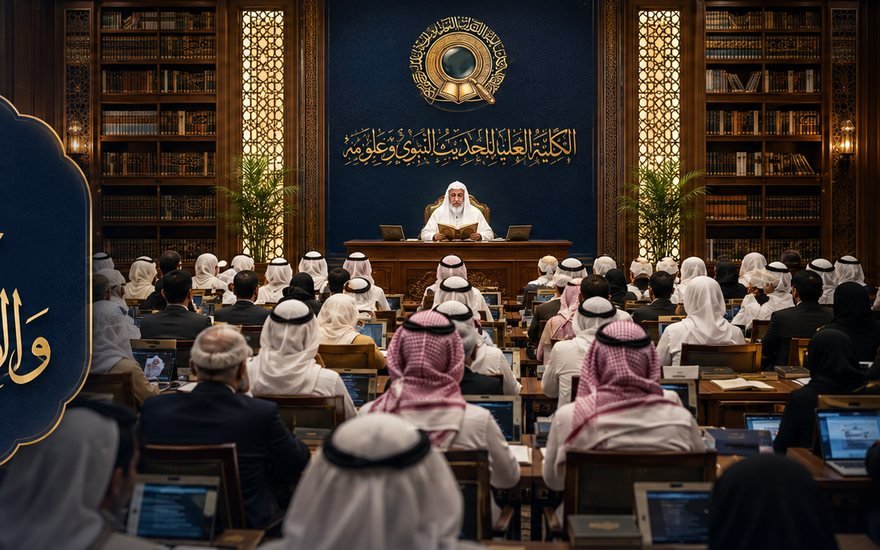
Seventeen members among senior scholars and academics from nine countries, supervising the courses, examining projects and granting ijāzahs.

The academic faculty
Third pillar

Curricula by stage of specialization

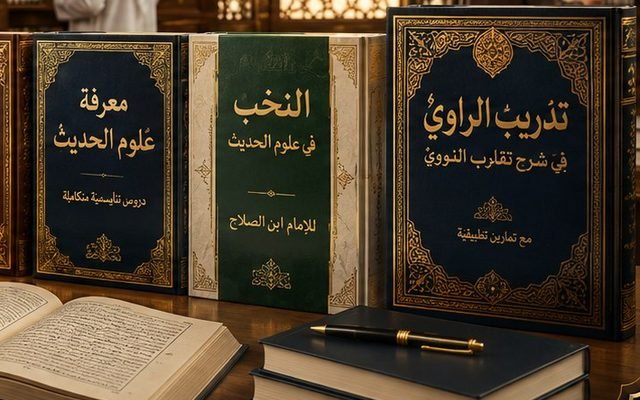
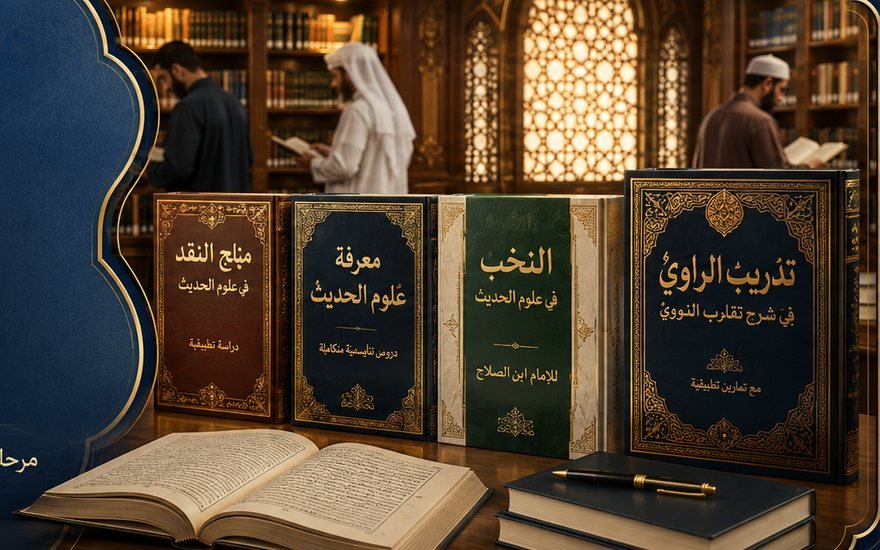
Twenty-four accredited courses across three stages, from Ibn al-Ṣalāḥ's Muqaddimah to Tadrīb al-Rāwī and the books of hidden defects.

The study plan

The academic faculty

An elite of senior scholars

The academic faculty: an elite of accomplished scholars and researchers who combine the legacy of the great hadith masters with the tools of modern research.

All members

    Discussion councils

    The Forum of Scholars and Researchers

    A scholarly forum for academic discussion among hadith scholars, their researchers and students — study of chains, defects, terminology and manuscripts, upheld by the etiquette of the hadith folk.

    All discussions do not necessarily represent the college's view or orientation; they express the opinions of their authors.

    Latest councils
    • Pinned Refining the ruling on the addition of a reliable narrator when contradicting one more reliable

      Prof. Dr. Abd al-Jabbar al-MarraniScientific Council memberDefects & analysis2 hours ago
      47posts
    • Pinned The pivot of "Actions are but by intentions" and the claim of Yahya ibn Saʿid's sole narration

      Dr. Muhammad ibn Salih al-UmariProfessor of chainsChains & narrators5 hours ago
      38posts
    • Criteria for ruling a hadith as disturbed among early and later scholars

      Dr. Ahmad ibn Abdullah al-ShihriDoctoral researcherDefects & analysisYesterday
      31posts
    • A manuscript of "al-Tamhid" in the Qarawiyyin library — description and collation

      Dr. al-Husayn Wuld BabaProfessor of manuscript studiesManuscripts & editingYesterday
      26posts
    • Is the sole narration of a truthful narrator accepted in foundational matters?

      Dr. Umar ibn Yahya al-HumaydiFaculty memberChains & narrators2 days ago
      24posts
    • The hidden mursal: defining its limit and its difference from tadlis

      Dr. Abd al-Rahman al-KinaniResearcherTerminology & application2 days ago
      22posts
    • The effect of manuscript variants on the wording of Ṣaḥīḥ al-Bukhārī

      Dr. Sayf al-Din al-AnsariManuscript editorManuscripts & editing3 days ago
      19posts
    • Student discussion: gathering and studying the chains of "no harm and no harming"

      Advanced Stage studentsStudent discussionTerminology & application3 days ago
      17posts
    • The rule "who preserves is proof over who does not" — refinement and restriction

      Dr. Bashir ibn Ibrahim al-NijiriFaculty memberDefects & analysis4 days ago
      15posts
    • Narrators al-Bukhari included despite criticism — the method of the two Shaykhs

      Dr. Khalid ibn Saʿid al-QahtaniResearcherChains & narrators5 days ago
      14posts
    • Hadith comprehension: the import of the bare imperative in the hadiths of prayer

      Dr. Tariq ibn MansurAssociate professorHadith comprehensiona week ago
      12posts
    • Iʿtibar, corroborations and witnesses — refining the terms with examples

      Dr. Anas ibn Yusuf al-HalabiDoctoral researcherChains & narratorsa week ago
      11posts
    Content is protected under the college's intellectual and scholarly rights — viewing is allowed, copying is not. Browse all councils

    The academic track

    Qualifying students to become accomplished scholars
    and researchers in Prophetic Hadith, its sciences and its hidden defects

    Leadership in training male and female students in applied hadith research — twenty-four accredited courses, an original scholarly project, and a certified ijāzah documented with a number and record.

    Download the study plan
    1. Stage oneOne academic year · 8 courses

      Foundation Stage

      Mastering terminology and the principles of narration, reading Ibn al-Ṣalāḥ's Muqaddimah and applied hadith terminology, with weekly training in reading chains.

      • Muqaddimat Ibn al-Ṣalāḥ
      • Nukhbat al-Fikar
      • Applied hadith terminology
      Stage courses
    2. Stage twoOne academic year · 10 courses

      Advanced Stage

      Tahdhīb al-Kamāl, comparing narrations and studying chains and defects, with applications on the two Ṣaḥīḥs and the books of defects and biographies under direct supervision.

      • Tahdhīb al-Kamāl
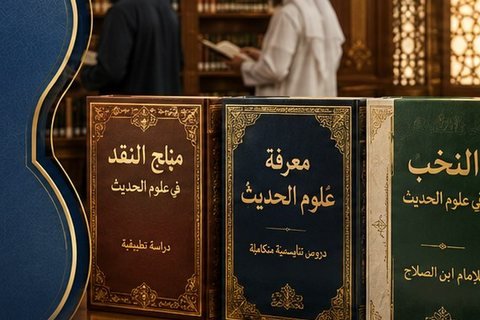
      • Maʿrifat ʿUlūm al-Ḥadīth
      • Methods of criticism
      Stage courses
    3. Stage threeOne academic year · project + defense

      Research Stage

      An original scholarly project supervised by a faculty member, concluding with a public defense and a certified ijāzah that opens the ʿālamiyyah.

      • Tadrīb al-Rāwī
      • Research methods
      • The project & defense
      Stage courses
    4. Secondary stageAcademic track · 10 courses

      Secondary Stage

      A foundational academic stage combining sciences, languages, humanities, and religious education in a balanced track for students.

      • Mathematics
      • Physics
      • Chemistry
      • Religious Education
      • Arabic Language
      • English Language
      • Biology
      • History
      • Geography
      • Computer & IT
      Stage courses

    Extending the mission

    Digitization & partnerships

    Two institutional goals that carry the college's impact beyond its halls: technology in the service of Prophetic Hadith, and bridges linking the college to scholarly institutions.

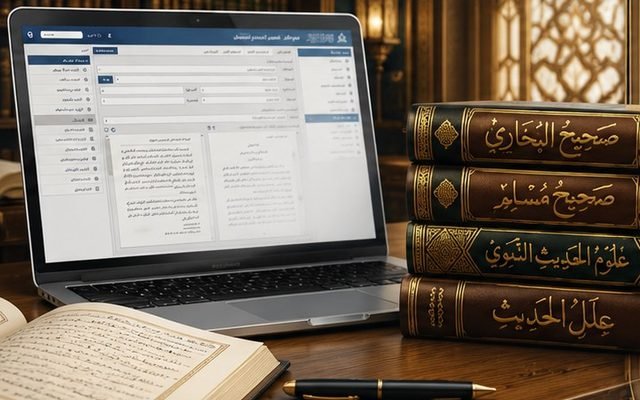
    Hadith digitization

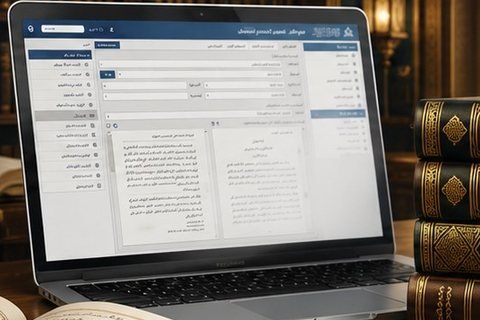
    Contributing to the development and evaluation of beneficial technical ideas and works in the service of Prophetic Hadith, its sciences, its jurisprudence and its hidden defects.

    Hadith research sites & apps

    Building partnerships & bridges

    With academic bodies and scholarly institutions — twinning, exchange of expertise, and joint research and scholarly projects.

    Partner with the college

    Admissions & registration

    Four steps to your seat

    Fees are optional and not a condition for admission; every student has what suits their means — full payment, reduced fees, or free.

    1. 1
      Complete the applicationBasic details, your academic qualification, and what you have previously studied in the hadith sciences.
    2. 2
      Placement testA short test in terminology and the principles of narration that sets your starting point in the plan.
    3. 3
      Academic interviewA brief meeting with a faculty member to assess readiness and the most suitable track.
    4. 4
      Admission & account setupAdmission notice, activation of the student portal, and access to the Student Forum and Forum councils.

    Frequently asked questions

    Is study remote or on campus?

    Study is fully remote through the college's platform, with weekly live councils that are recorded and made available afterwards. Chained samāʿ sessions are held both in person and by stream.

    What certificate do I receive?

    A certified scholarly ijāzah documented with a number and a verification code, issued by the college with the approval of the Scientific Council. Completing the program marks the beginning of the ʿālamiyyah in the hadith sciences.

    Do I need a university degree to enroll?

    No degree is required. The criterion is passing the placement test and the academic interview; the Foundation Stage is open to those without prior qualifications.

    How long is the program?

    About three academic years: one year for foundation, one for the advanced stage, and one for research and defense. An advanced student may shorten the Foundation Stage through the placement test.

    How do I take part in the Scholars' Forum?

    Viewing is open to everyone; writing is limited to faculty members, the college's researchers and its registered students, according to the discussion rules approved by the Scientific Council.

    Can I study alongside my job?

    Yes. The study load is designed for eight to ten hours per week, live councils are recorded, and assignments have flexible submission windows.

    Join the next cohort

    Begin your journey in the service of the Sunnah and heritage

    Admissions for this year's cohort close on the first of September. Seats are limited to ensure the quality of academic supervision.

    Hadith College on your phone

    Explore courses and follow college news in the Android app.

    Download the app (APK)